
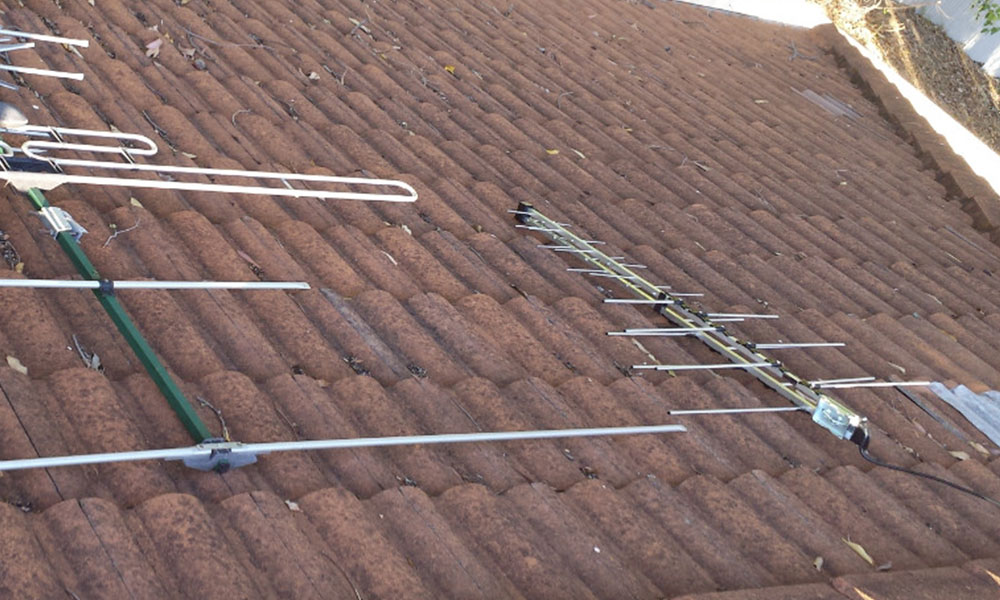
Have you ever driven through a new housing estate or a road with a few newly constructed homes and noticed that digital TV antennas are a fraction of the size
of the old analog antennas?
It’s not to save on manufacturing costs, it’s not by regulation and definitely not by coincidence.
It’s to make them receive a stronger signal. That’s right, these smaller antennas pick up a stronger signal.
Still don’t believe it?
There’s a science behind it.
Every channel is transmitted from the tower using a different frequency.
For example, in Perth currently digital channels run on frequencies 177.5 MHz – 226.500 MHz
The length of the wave differs for each frequency being used, remember that.
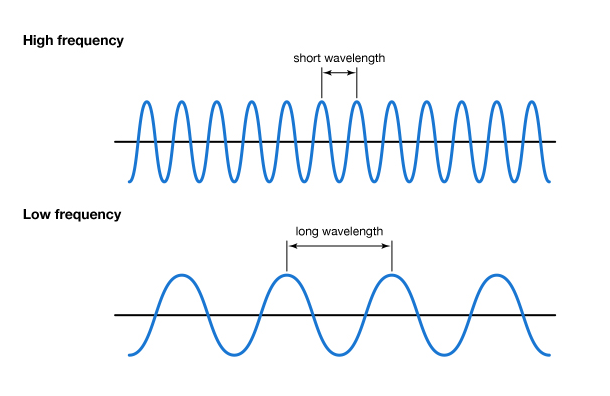
Let’s calculate the wavelengths, and half wavelengths for the frequencies most common channels received from a TV antenna in Perth.
Each arm of a TV antenna has a different length. The length of each arm must be a specific length in order to pick up the strongest signal on each different channel.
For most TV antennas, 1/2 the wavelength of each arm is used
For example, the now obsolete analog channel 2 (ABC) ran on a low frequency and had a extremely long wavelength. In comparison, the Digital TV frequency for ABC has a very small wavelength
Lower Frequency = Larger Wavelength = Larger antenna arms
Higher Frequency = Shorter Wavelength = Smaller antenna arms.
| Channel | Frequency | 1/2 Wavelength (Antenna Arm Diameter) |
| ABC Analog (obsolete) | 64.25 MHz | 2407 mm |
| Seven Digital | 177.5 MHz | 844 mm |
| SBS Digital | 184.5 MHz | 812 mm |
| Nine Digital | 191.5 MHz | 782 mm |
| Ten Digital | 219.5 MHz | 682 mm |
| ABC Digital | 226.5 MHz | 662 mm |
Analog TV frequencies started as low as 64.25 MHz, where ABC was located, requiring arm diameters as long as 2407 mm
Digital TV frequencies have the lowest frequency on 177.5 MHz, where Channel 7 is located, requiring arm diameters as short as 844 mm.
With digital frequencies being higher, the larger elements of analog antennas are no longer needed. A smaller “digital antenna” can then outperform a larger “analog antenna” because it’s arm lengths are specifically tuned to the frequencies it needs to receive and at the same time reject any out of band interference.