Installing TV Antennas is often can be as easy as pick a location that is the easiest to get to, put the antenna on and hope for the best.
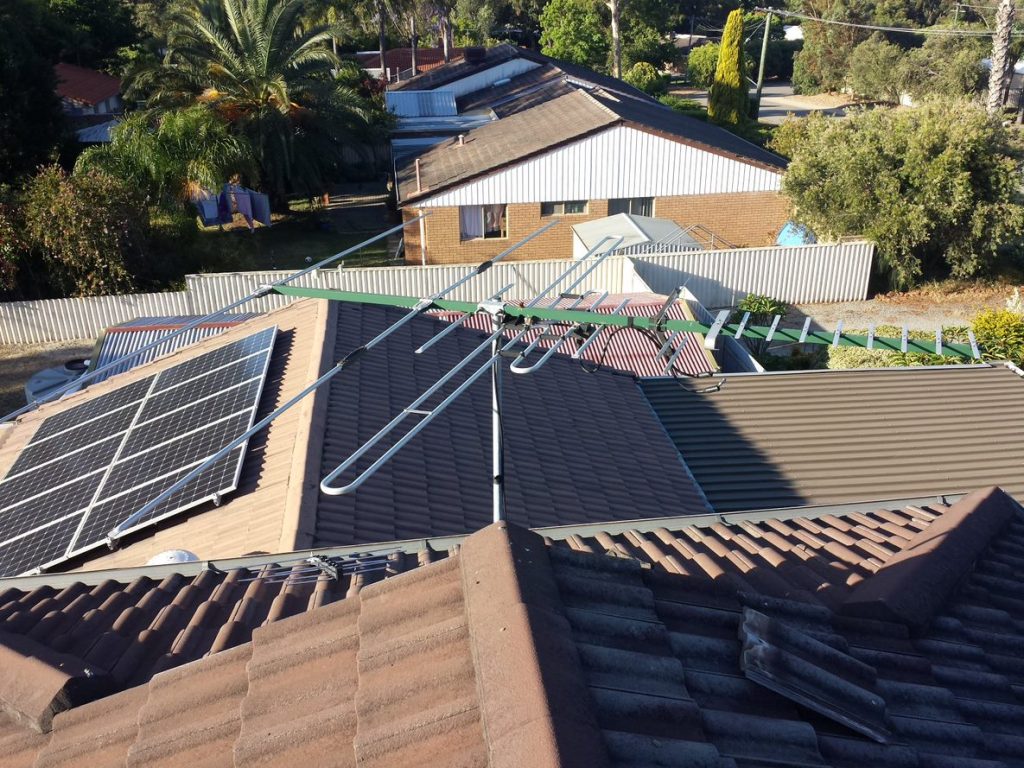
Simple theory is: the towers transmit, the antenna receives, unfortunately reality is never so simple. RF Signal is not spread equally above all areas on the roof space, and selecting the incorrect location for your TV antenna installation in Perth can result in a poor signal, especially on Ten and ABC channels which are known to have a lower signal strength. The importance of doing a proper site survey to get the best signal increases in poor signal areas such as Scarborough, and specific areas around Padbury, Duncraig and Kallaroo.
To conduct a proper site survey, a professional grade field strength meter is used such as from Unaohm or Roversat. Cheaper DIY meters do not produce repeatable results and no contractor can be in the business as a professional antenna technician without high end measuring equipment, especially when back to back testing is required.
The specific antenna that will be installed for the customer is used. At every point of the roof, we conduct the following tests at 3 different heights
1. DCP (Digital Channel Power), a measurement of the signal strength being received by the antenna
2. MER (Modulation Error Ratio, a measurement of how clean and error free the signal is
3. Slope, a measurement taking into consideration the power of all channels in the band
4. Stability of DCP and MER, a measurement of how stable the readings are over a given period of time.
Without all four of these measurements being taken at many points in the roof before the antenna installation, the customer will never get the best reception possible.
As a step of planning and preparation, a significant amount of time and care is invested in doing this to get the customer the best results, but also saves the customer money in the long run by reducing the need of costly relocation or modifications down the track which is what keeps the majority of the TV antenna trade in business.
If there is a specific channel that is very weak in the area, especially one that the customer watches a lot we will often select a location on the roof that is biased to giving this channel the best signal possible compared to stronger channels. Once the correct location is chosen, we will proceed to install the antenna and fine tune for the best possible signal, giving you the best quality reception possible.
The age old question that I get asked is – can my antenna be mounted inside the roof space? Sure, anything can be done, but how good will it work?
While this type of installation is advised against, many customers still find this placement attractive. While signal is greatly decreased when mounting a TV antenna inside the attic, with a few careful steps this can be done successfully in some cases.
The answer whether in-roof antennas work is not simply a yes or a no, however a varying degree of reception reliability from perfect, intermittent to failure to display or scan in any channels. This is all dictated by the available Signal Strength and quality outside and inside your roof
The first fundamental that must be understood is the signal that is available outside your roof, before it is degraded after it penetrates through your roof. In Perth for example, areas where signal is very strong are Dianella, Morley, Ascot, Midvale, Cannington and Ballajura for example. The signal strength and quality in suburbs like this is known amongst installers to be very strong and is able to make it through obstructions such as roof tiles and still maintain an acceptable level inside the roof space where the antenna will be placed.
In comparison, trouble areas such as Fremantle, Scarborough, Wembley Downs and Claremont have a very low signal strength available at lower heights, which generally after penetration through roof structure will not provide an adequate signal strength and quality to the antenna inside the roof.
Once the fundamental of available signal strength is understood, we consider the variables that will effect that signal
– Roof Surface – Generally a Tile roof will pass the signal without too much degradation. Any sort of sarking or insulation under the tiles will heavily degrade the signal strength. A metal roof will block almost all the incoming signal. It is only in rare cases where signal strength is very strong that reception is possible, however
– Antenna position – With in-roof antennas, height is a major factor, even small adjustments in height can yield noticeable improvements. Adjustment is also important so it must be ensured the antenna can point toward the correct direction of the tower in the proposed installation area.
The conclusive rule of thumb is – An in-roof antenna installation is possible in any suburb that has a very strong signal of 70dbuv and higher available and where the antenna is being installed on a house with a tile roof without any sarking or insulation.
TV Antenna installation can often appear like a fairly simple task, yet there is a lot of hidden catches, requirements and important things every customer should know before hiring an antenna installer. From legal requirements to protect yourself and your home, to warranties and fine print there can be a lot of things to watch out for that may cause you grief in the short or long term.
Is Perfect Reception Guaranteed?
When you turn on the TV most times, you expect to flick to your favourite channel without an issue. This normally is the case if you have a brand new TV antenna or have no issues with your installation. In the case that you have just built a house and need to get an antenna installed, you expect that everything will work perfectly as it is new. This is not always the case as if the antenna is not placed high enough, or the installer is cutting corners by using cheap cable and connectors you may have signal problems all which you cannot prove.
The second situation is in older homes where you may be having reception problems due to an old damaged antenna. The customer would normally call a technician and ask how much is the cost to replace the antenna. The issue is while the antenna may be renewed, there can be any amount of faulty connections, splitters, wall points and other equipment anywhere inside the roof that can cause reception problems in the future. Most antenna installers will only replace the antenna (as asked) and not advise the customer of any other works to be done, or that may require to be done.
Ask your antenna installer will guarantee you perfect reception. If the answer isn’t exactly a yes, find yourself another installer.
Will there be any additional costs?
A common practice among many larger antenna installers in Perth is to come in with a cheap and cheerful attitude often at an attractive price to stand out among others. The issue is everybody needs to win jobs, then make their job pay off. Most of this is done by hidden costs such as the requirements for boosters to be installed, larger masts all without the customer being told clearly on the phone or email. This is common practice of many mobs with vague generic sounding business names.
A common example and often an easy moneymaker is a newly installed antenna to replace a broken old one. If the customer still experiences TV reception issues later on after working well for a while, the installer is called back to look further into the issue to find a rusted splitter of some 20 years old in a hidden location. $100 + Parts and what not later is one of many more to come service calls to replace defective components which should have been replaced the first time. You will never know the real cost of getting perfect reception without a guarantee
Terms and conditions
Better known as fine print all for a good reason. Many companies have terms and conditions which use every trick under the sun to reduce their accountability should anything go wrong.
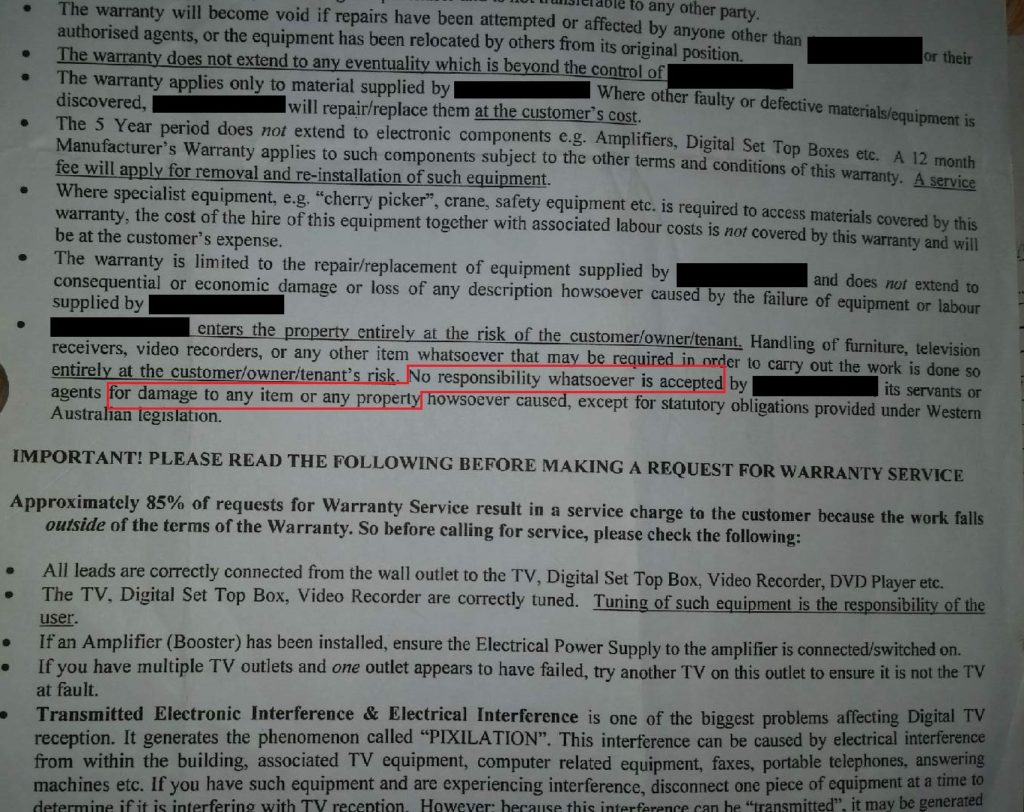
Some of these terms and conditions may have disclaimers that make their selling points and guarantees worthless, or even smartly attempt to work around certain laws. Below is a excerpt of the T&C’s used by a few antenna installation companies who clearly have little or no regard to their customers properties where work is completed
The real reason for the free inspection
Unless you are getting a quote for a multi-story, multi-million dollar development there is rarely any benefit to you for an on-site inspection.
While most installers who have years of experience are able to tell from a few questions over the phone such as what type of house you have and previous experience with the reception quality in your suburb, they will know over the phone what your requirements are without a need for inconvenient site visits simply for the purpose of a quote
The simple fact is these site visits are an easy way of getting themselves through the door to convince you to hire their services on the spot and is a wellknown and used tactic.
After completing many antenna installations in Perth and surrounding suburbs, we have found that our customers were left with the burden of old, broken antennas left on their properties that were inconvenience to get rid of and too big to fit in a regular recycle bin. That’s why we now offer a disposal service where we take away your old TV aerial and equipment. No matter how big or small the part is, at Antenna Direct Perth we are able to safely disassemble your old equipment or cut it into small pieces and transport it away.
Once your old antenna arrives back at our warehouse, it is taken apart where all aluminium elements are separated from metal elements and certain parts such as clamps may be salvaged, reconditioned and re-used for repairs of similar antennas where new parts of same dimensions are no longer available on shelf. Recyclable parts of the antenna are then sorted and delivered to local metal recycling facilities, where they are safely recycled and made into raw materials and eventually new products. We support responsible recycling of materials in order to reduce the impact on the environment and landfill
Once your old antenna arrives back at our warehouse, it is taken apart where all aluminium elements are separated from metal elements and certain parts such as clamps may be salvaged, reconditioned and re-used for repairs of similar antennas where new parts of same dimensions are no longer available on shelf. Recyclable parts of the antenna are then sorted and delivered to local metal recycling facilities, where they are safely recycled and made into raw materials and eventually new products. We support responsible recycling of materials in order to reduce the impact on the environment and landfill
With so many antenna installation companies in Perth around, the question is who to choose? Building upon years of experience, my team understands that every job is different and requires an individual focus and approach. Using the latest diagnostic equipment we can diagnose your TV reception issue and solve it with a high success rate with the use of the best materials.
Should you go for the most expensive or the cheapest quote? Why not forget about pricing altogether for a minute. With so many listings on Yellowpages and Google, all offering the common slogans and promises leaves you stabbing in the dark.
When hiring a professional installer to enter your house, work on your property around your family in exchange for your hard earned cash, there are a few hints that can help make your selection much easier. Your first correspondence on the phone to having the job completed and the after sales service you receive are all part of the product you are paying for.
So how do you make a decision?
Speak with them
Your first impression of a business will be shown in the way they communicate with you over the phone. Clearly state what you require done and describe the problem you are having. By the response you receive you will be able to gauge how effective the service you receive will be. Is the provider is being pushy, or do they genuinely care about helping you achieve your goals
Ask what work will be done
Each TV reception issue is different and requires a different approach, and taking short cuts will eventually lead to failure leaving you in the same spot, one fixed price cannot cover all bases. Enquire about the products that will be used, the type of cabling, and why it is required.
Get a written quote.
To avoid any fine print or overcharges, ask for a detailed written quote that outlines how every aspect of the job will be carried out so you can ensure that you will pay what you are quoted. Many providers often use unethical ways of obtaining business and overcharging is all to common. At Antenna Direct, your invoice will match your quote.
Do your research
A few minutes of some researching can give you lots of valuable information about the company you are about to hire to do work for you. See what others are saying online, look for examples of previous work and customer testimonials.
Hiring a professional antenna installer in Perth doesn’t just cost, it pays. After you have done your research and interacted with the businesses you intend to hire with a fair sounding quote and proposal, you will be able to form a decision that is way more beneficial and rewarding than simply comparing a list of names and quotes from a notepad. The price paid will long be forgotten as the quality of a nice job is seen and felt everyday. It’s not about how much or how little you spend, it’s the signature that you leave behind that counts.
Every TV antenna installation has to be tuned properly in order to receive the best reception, provide the best picture quality and in the case of digital TV, maintain a perfect picture quality with least chance of interference.
Many installers unfortunately use cheap meters which are inaccurate in their readings that provide misleading information to the installer and customer, resulting in either an unreliable installation, or unnecessary upgrades and callout fees later on down the track.
We have invested significant capital into buying top tier signal meters from Unaohm, Hills and Roversat in Italy, which we use from every day domestic residential installations, to commercial fitouts in some of Perths largest high rise buildings. Troubleshooting TV reception issues is made much easier and effective to finding the fault too.
Unaohm T40 – A compact entry level signal meter, used in various residential installations and troubleshooting.
Rover Hills STC+ – A Foxtel approved meter, for use of precision alignment of satellite dishes.
Unaohm AP01 – A top tier commercial grade signal meter. We use this for fault finding in the most difficult situations, including tracking down sources of interference, and careful calibration in black spot areas.
By using the best available signal meters, the benefit to the customer is that your antenna will be tuned with precision and provide the clearest, most reliable signal and picture.
Think back of when having cable was a high class privilege only afforded to those who were well off and upper class, the small group who was the envy of everybody at the school. Foxtel, or better known as Galaxy back in the day was and is still one of the preview pay TV providers, offering over 200 channels with all the programming you can imagine under the roof at the touch of a remote.
Many households have elected to not even get a TV Antenna and simply use Foxtel as their basic form of TV, however newer technologies and larger channel selection on free to air TV is evening the divide between both forms of television. Channel sevens spin-off channel 7-mate often has high quality programming of many American shows such as Pawn stars, classic restorations and ice road truckers which were were only exclusively reserved to Pay TV streams.
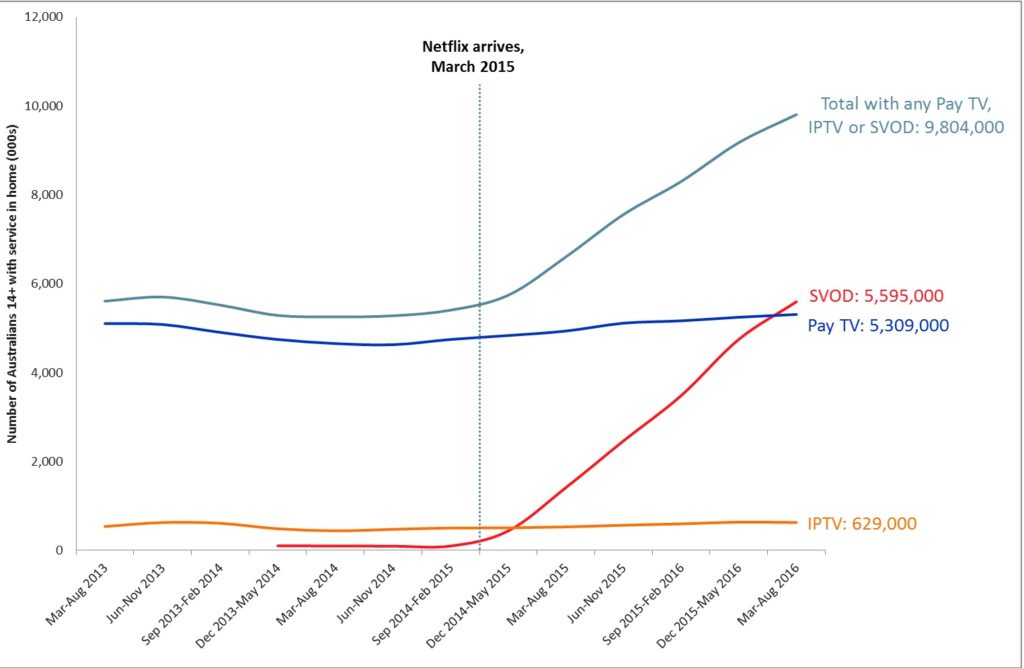
Modern day ADSL and NBN technologies have enabled Australians to have a faster speed that allows us to use IPTV streaming services such as Netflix, Stan and Apple TV amongst a handful of names that have appeared on the market offering a fraction of the price of traditional cable access or satellite pay TV with a huge selection of channels
Roy Morgans annual data analysis on demographics of Pay TV users show IPTV has had a rapid surge of demand since 2014 with over 70% of the hired participants shows great interest in IPTV and no interest in a Foxtel ready setup, overtaking that of traditional Pay TV which has over the years luckily stayed very stready in demand. Part of IPTV’s new found popularity has been due to its standard offering as a package with many well known internet providers such as Iinet, Dodo, TPG and Westnet.
Our market is becoming more competitive and price sensitive, it has created and an even playing field and more favourably some healthy competition. Expect to see lots of more introductory deals, however do read the fine print and take not of your channel selection. With a lot of options to chose from. It’s predicted that the subscriber access TV industry will eventually even out in terms of price. Be sure to compare the programming as some IPTV offers have a very narrow range of programs with many well-known ones non existent.
A common offer and request during an antenna installation is an Australian made TV Antenna, coupled with a expectation for the product to last a very long time and a confident guarantee and expectation of perfect reception. Like the tooth fairy, this does not exist.
During the infancy of the TV Antenna industry in Perth during the 1960’s and 70’s, there were only a few leading brands producing Australian made TV antennas, from home grown companies operating, engineering and manufacturing wholely within Australia. It is not uncommon to see some Aussie TV antennas that are still giving perfect reception after 40 years in service. Hills was one of the most prominent companies, with most of the market share, anything else was not desired.
During the 2013 digital TV switchover and consequential boom in demand for digital TV antenna installs, a wide array of new antennas came onto the market all from different origins, however many which were advertised as Australian made. The question that has to be asked is what constitutes the right to call a product Australian made. By the book, any product that is significantly modified in Australia may be called Australian made. Often the case is cheap Chinese made TV antennas, with finishing touches added in Australia that have infiltrated the market without any suspicion to the customer.
The only TV antennas made in Australia I have seen that have lasted the test of time were manufactured in the 1960s to 1990s by Hills Antenna and TV Systems, easily identified by the bright orange coloured element supports and balun housing. It’s not uncommon to see these last 40 years before failure, with some still in service to this day. Apart from overall great construction the clever design of the balun housing shields the connection point from water, and keeps water away from it incase of moisture ingress into the housing. These truly are excellent Australian made TV antennas which no longer are available.
Commonly used TV antennas currently made in Australia have a very heavy duty design and are also prone to failure. Some brands and models are a regular on the removal scene while others are beginning to show their weak points, from poor design choices. Here are two commonly removed TV antennas that are actually made in Australia, and how they fail.
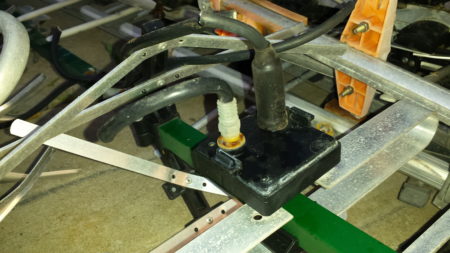
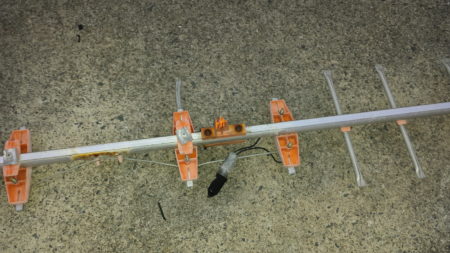
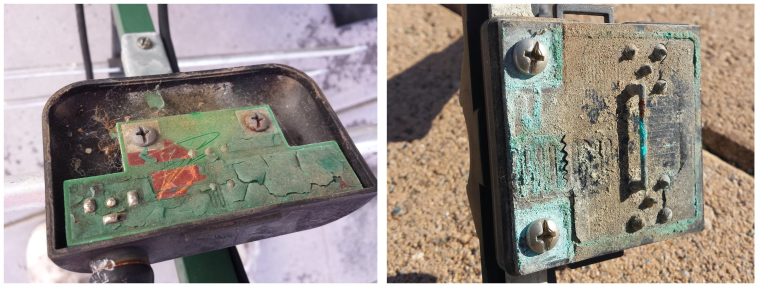
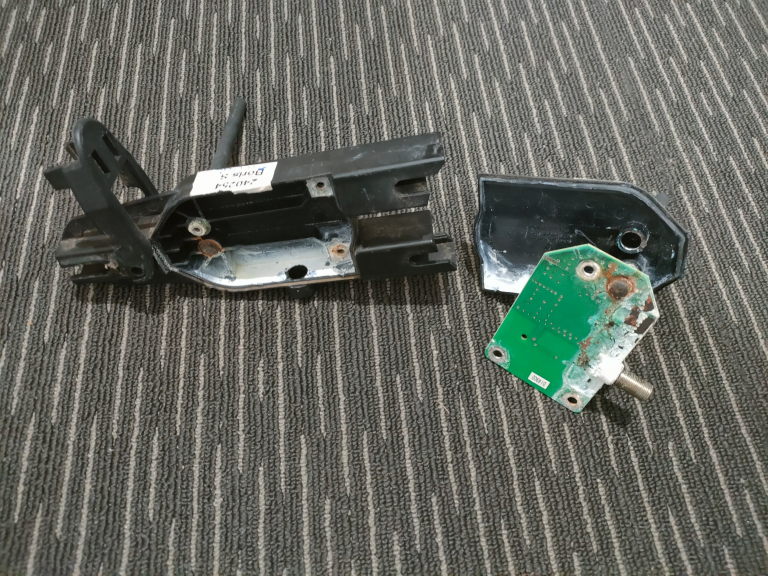
This TV antenna is number one on the removal scene, some failures we have seen as early as 2 years while others fortunately do last quite a decent amount of time depending on the area. What happens is that water somehow enters the PCB enclosure, there are two of them so even more points of failure. The circuit board is not lacquer coated so the tracks, components and solder joints eventually rust, and there are no drain holes. This has often been mistaken incorrectly for F connector boots that are incorrectly fitted, however our antenna man in Perth has found failures even when the cable boot is perfectly fitted. Matchmaster has recently revised this TV antenna and added two drain holes at the bottom of the balun enclosure.
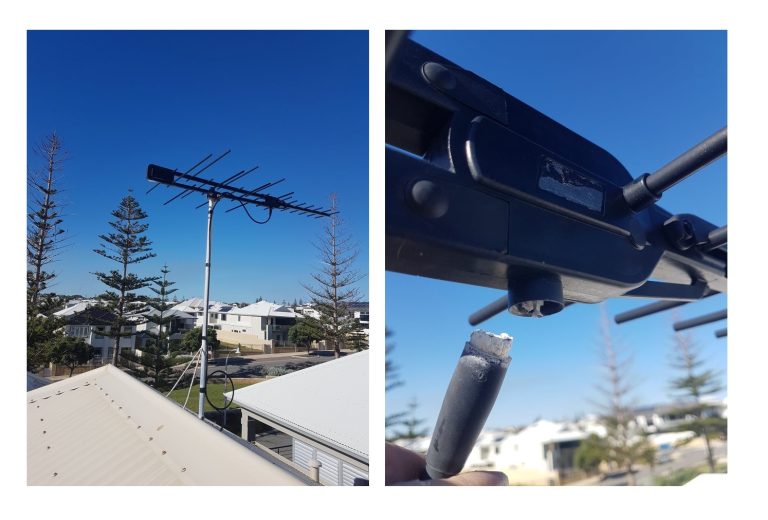
The second Australian made TV antenna in Perth we are seeing failures on is the strongest built TV antenna on the market, and is the best choice for when impact resistance is required. We installed many of the first of these back in 2012 when they released however have always been quite cautious of the design, mainly the sealed balun enclosure. The issue is the only real test that shows how a TV antenna will last is time. As with anything when a proven design gets discontinued for a new design there is always a list of unknowns that can cause issues. The failures we have seen have been water entry into the balun housing with faulty units being removed from between 4-7 years. The water creeps down to the lowest point of the enclosure which is there the F connector is, and can also corrode the cable.
The second Australian made TV antenna in Perth we are seeing failures on is the strongest built TV antenna on the market, and is the best choice for when impact resistance is required. We installed many of the first of these back in 2012 when they released however have always been quite cautious of the design, mainly the sealed balun enclosure. The issue is the only real test that shows how a TV antenna will last is time. As with anything when a proven design gets discontinued for a new design there is always a list of unknowns that can cause issues. The failures we have seen have been water entry into the balun housing with faulty units being removed from between 4-7 years. The water creeps down to the lowest point of the enclosure which is there the F connector is, and can also corrode the cable.
This first example is of a TV Antenna claimed to be manufactured in Australia. The manufacturer often had little or no contact details or web presence, the only leed was a photo of TV antennas being stockpiled or put together in a backyard shed. While this is a very commonly used antenna and has proven to be reliable and acceptable value for money for most customers, we often see defects as soon as 18 months with these. We had been advised they were silicon sprayed, however close inspection revealed no traces of silicon being used. This antenna has been often revised throughout the years with positive improvements.
The second example is a similar looking antenna with thin arms in a smaller form factor again being claimed to be Australian made. No information has been provided to verify the authenticity of the product. While this TV antenna has various anti corrosion protective layers, a robust weather cap fastened with a screw, we had found that they caused random picture break up during windy weather, which were often hard to diagnose for the customer due to the intermittent nature of the fault condition. This caused costly callout fees and further costs to the customer for diagnosis of what was once a cheap antenna installation job to begin with.
While globalization and free trade can be a great thing, it allows a space for dodgy operators to grow within a specialized trade and industry that most professional antenna technicians simply do not want to be a part of.
What we see is that we have experienced failures from commonly used Australian made TV antennas and also TV antennas made overseas, the best antenna is the one that a reputable installer recommends for the application and the method in which it’s installed plays a big factor in how long it will last. TV antennas manufactured with a low cost as a requirement, with little local enterprise or engineering input and R&D leads to a product that while may be true to its specifications, is inferior in the quality an Australian would expect. This sort of product can never be coupled with long warranty periods that bear no relationship to it’s reliability, therefore a $150 Australian made, Australian quality antenna job, like the tooth fairy, is a myth.
We ask all clients and non clients to research the reputation behind the people offering the product and service and make an educated decision that can save them money in the long run.
TV antenna installation can often be overlooked as a simple task, however there are various factors that need to be considered such as the correct tools, masts, mounting equipment and coaxial cabling. A thorough understanding of different types of TV aerials is required and equipment required to tune your television antenna. Locating and installing the proper mount and mast equipment on various roofs such as colour-bond or tile roofs will require different types of hardware and tools for a secure installation. In this article we will explore all these topics aswell as give you an insight into what goes into every one of our jobs
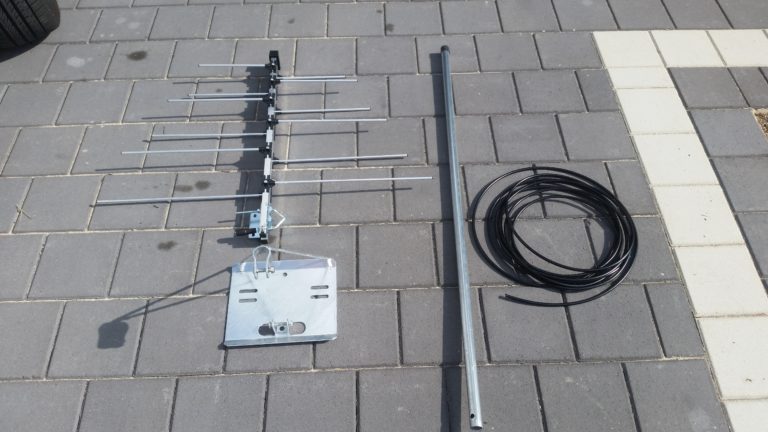
– Aerial – Base and Pole (Valley mount for Tile roof) – RG6 Coaxial cable
Tools and consumables
To properly carry out the installation you will require
– Cable stripper – F Connectors – F compression crimp tool – Electrical tape – Silicone – Drill and drill bit set – Driver and socket set – Coach screws – Field strength signal meter capable of measuring MER and BER
Installation steps
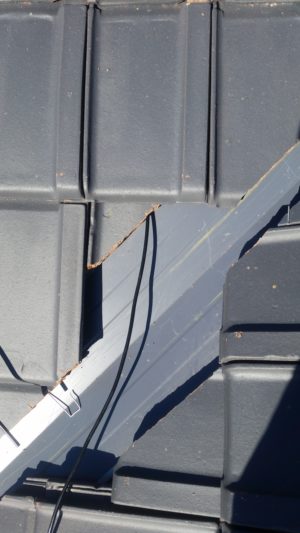
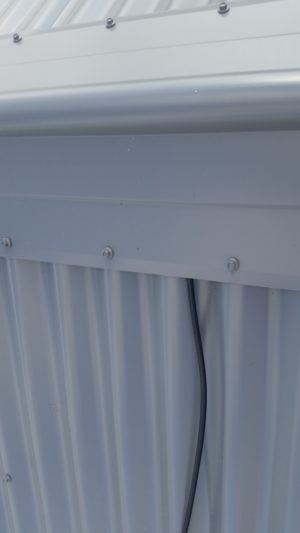
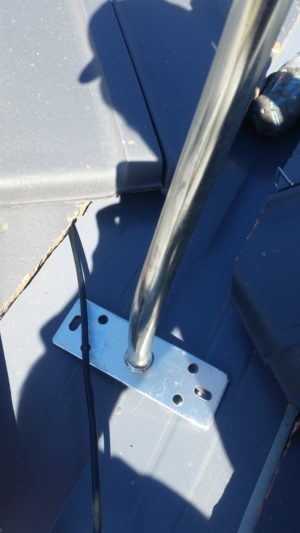
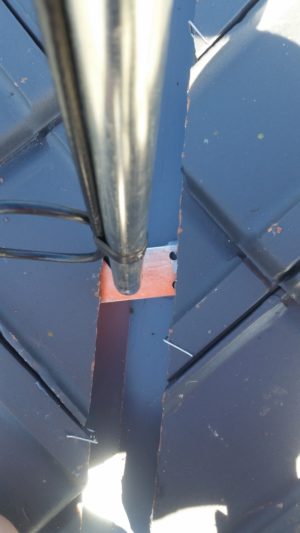
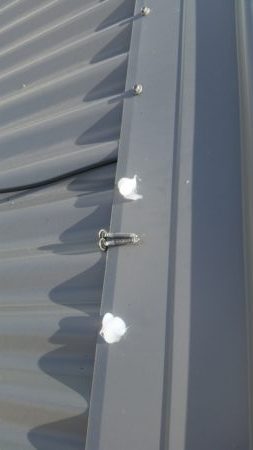
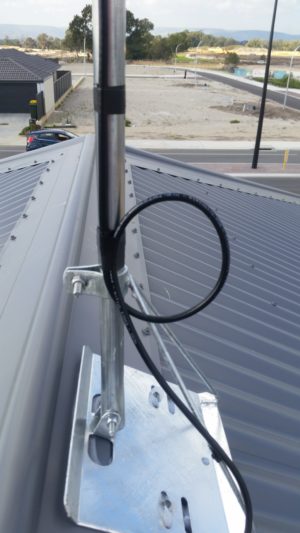
The first step is to run your coaxial cable from your roof space to the required location on the roof. On tile roofs you need to find a valley, which is often where two roof surfaces meet, separated by a gutter. The cable is simply ran into the roof by lifting a tile up and pushing it through. On a colourbond roof, you will insert your cable from inside the roof, under the ridge capping and push it out onto the roof.
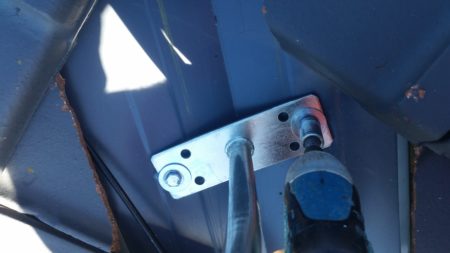
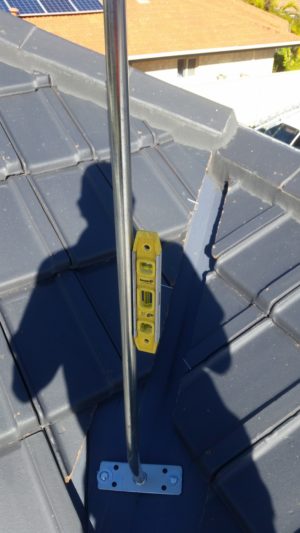
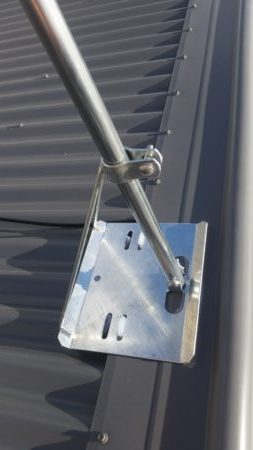
Now it is time to install your mount. On a tile roof begin by holding the valley mast central onto the gutter, ensuring the pole is fairly straight. Slide two tiles upward to reveal more of the surface. Proceed to mark out where to drill the holes for the screws using a marker or a drill bit.
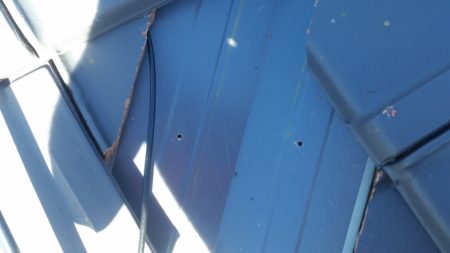
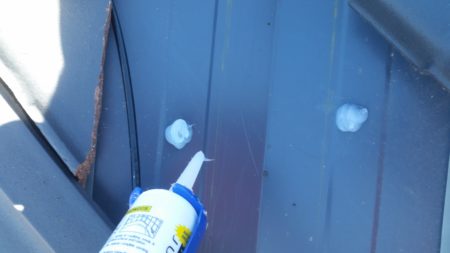
Drill two holes all the way through and apply sealant over them to reduce chance of leaks. Hold the base down aligned with the holes and drive your screws in until they bottom out.
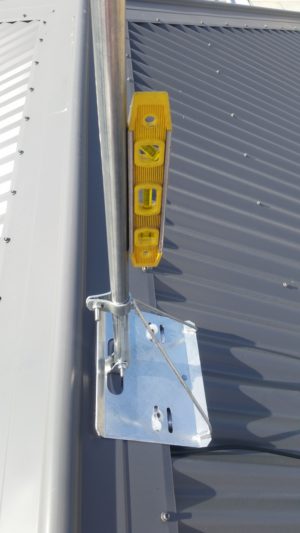
Use a spirit level to ensure the pole is straight and make adjustments if needed. When done slide both tiles back to cover the bolt holes. Using this method, no tiles are cut in anyway and reduce the possibility of any leaks entirely.
Use a spirit level to ensure the pole is straight and make adjustments if needed. When done slide both tiles back to cover the bolt holes. Using this method, no tiles are cut in anyway and reduce the possibility of any leaks entirely.
Use a spirit level to ensure the pole is straight and make adjustments if needed. When done slide both tiles back to cover the bolt holes. Using this method, no tiles are cut in anyway and reduce the possibility of any leaks entirely.
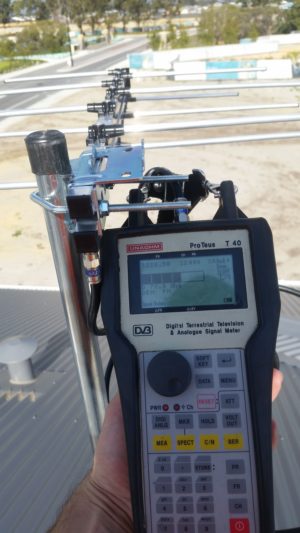
Install your antenna to the pole and point it in the general direction of where the other antennas are pointed. Plug your signal meter into your TV antenna and adjust the signal strength until it is the strongest. We use only the best Italian made signal meters from Unaohm and Rover to ensure your antenna is tuned perfectly. Tighten both nuts on the clamp to lock the antenna into position.
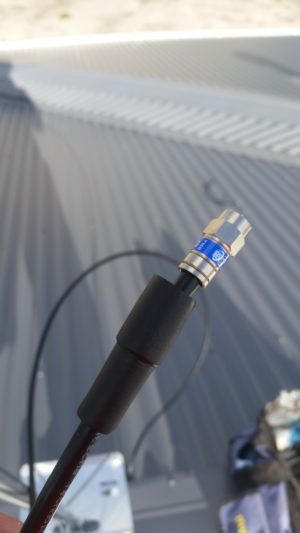
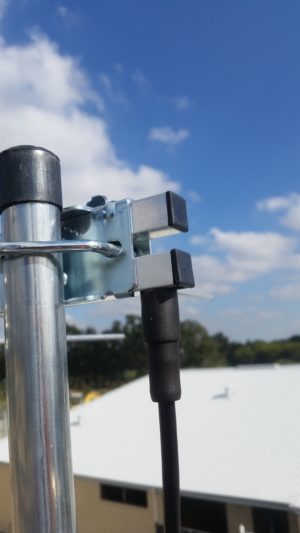
Install the rubber protective boot to your cable which is normally supplied with the antenna. Fit an F connector and crimp it onto the cable. Finally connect the cable to the antenna and push the rubber boot to cover the connector.
Install the rubber protective boot to your cable which is normally supplied with the antenna. Fit an F connector and crimp it onto the cable. Finally connect the cable to the antenna and push the rubber boot to cover the connector.
Have you ever wondered what exactly causes poor TV reception, such as random artefacts showing on your screen, sound breaking up and picture tearing up and blocking? The answer is simple – poor quality signal. The question is – where does it come from?
The answer is simple: poor quality signal.
The question is, where does it come from?
Expert diagnosis of TV reception requires expensive field strength meters when used properly can pinpoint the exact cause of the issue. The good news is that there are a few simple steps that can be taken to fix your TV reception without expert knowledge.
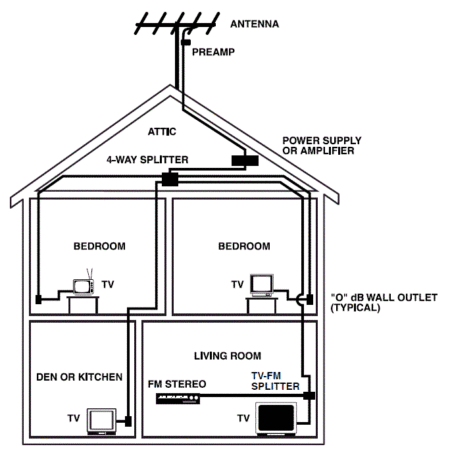
Your TV antenna system is made up of various components, all connected together by a coaxial cable.
Check Your Antenna
This one is a no-brainer.
The first and most important component of a TV Antenna system, is well, the TV Antenna. The condition of the antenna, model and design aswell as mounting location and direction all play a factor as to how strong of a signal it can receive.
Condition – Check for any corrosion or water entry around the connection point or balun box if your TV antenna has one. Ensure all arms are in good condition, not bent, loose or broken
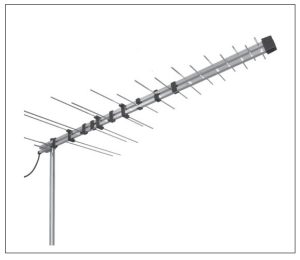
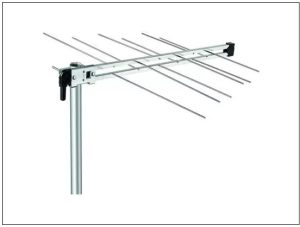
Design – Your TV Antenna needs to be the correct design to suit the area it is being used in, aswell as the channel ranges you intend to pickup. Old analog TV Antennas will not pick up digital signals as efficiently. An easy way to spot an Analog antenna is the two long arms at the back which were designed to pick up Channel 2, most commonly known as ABC. A true digital TV Antenna should not have any arms longer than around 842mm. Ensure you are using the correct antenna for your area, some areas require a UHF Antenna, and some require a VHF Antenna while others require a combination antenna.
An easy way to spot an Analog antenna is the two long arms at the back which were designed to pick up Channel 2, most commonly known as ABC. A true digital TV Antenna should not have any arms longer than around 842mm. Ensure you are using the correct antenna for your area, some areas require a UHF Antenna, and some require a VHF Antenna while others require a combination antenna.
Ensure you are using the correct antenna for your area, some areas require a UHF Antenna, and some require a VHF Antenna while others require a combination antenna.
Location – Your TV Antenna needs to be mounted high enough to receive a strong signal, mounting locations off the eaves or at the lowest point of the house generally are unsuitable for optimal TV reception. Your TV Antenna also needs to be pointed in the correct direction toward the tower. An easy way is to compare the direction the majority of your neighbours TV antennas are pointed.
Your TV Antenna also needs to be pointed in the correct direction toward the tower. An easy way is to compare the direction the majority of your neighbours TV antennas are pointed.
Cabling Is Important
Coaxial cabling carries the signal from your TV antenna throughout all the components in the system and eventually your TV. Any faults or damage in the cabling can act as a bottleneck and degrade signal strength and quality.
Things to check is the condition of the external cabling from the antenna leading into the roof, ensure there are no cracks on the sheath or any sharp kinks as it enters into the roof.
All connection points on the cabling need to be in good condition. Ensure the correct type of cable is used, RG6 Quad Shield is the best choice and most commonly used.
Check The Splitter
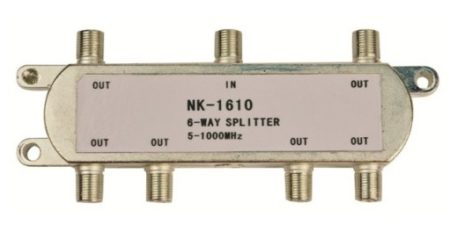
The splitters job is to split an incoming signal to multiple cables, as well as to equally distribute the signal to all wall points.
When there is a fault at the splitter, this can cause a variety of different issues, such as variable TV reception across each TV point, or no TV reception to one room and perfect TV reception to another outlet.
Corrosion is the most common problem that affects TV splitters, from years of exposure to dirt and moisture, or water entry through coaxial cabling. Often a perfect remedy is to remove the old splitter and to replace it with a brand new one. shielded splitters suited to analog TV, may not be suited to digital TV
The Wallplate
The wallplate, wall point, or wall socket is the connection point that feeds the signal to your televisions tuner. Over time with wear and tear wallplate fittings can often get loose, partially broken and corroded. A tell-tale sign is improved TV reception if you wiggle or apply pressure to the wall point. If you suspect a faulty wallplate, replace it with a new F type wallplate.
Over time with wear and tear wallplate fittings can often get loose, partially broken and corroded. A tell-tale sign is improved TV reception if you wiggle or apply pressure to the wall point.
If you suspect a faulty wallplate, replace it with a new F-type wallplate.
Do A Tune
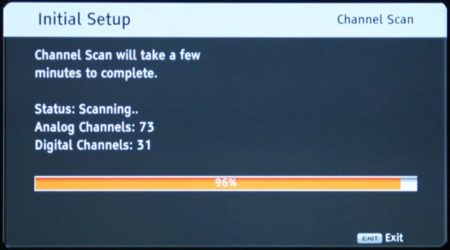
The final and one of the most important steps to good TV reception is to do an Auto Scan. This ensures that all the channel frequencies are properly tuned into your TV. Your TV may have old channel data still present from another suburb, city, or country. If you have duplicate channels on your program list, your TV may be retaining old channels and in this case it is best to watch the channel that gives the best TV reception. Doing a factory reset on your TV can also help wipe old channel data before a re-scan.
This ensures that all the channel frequencies are properly tuned into your TV. Your TV may have old channel data still present from another suburb, city, or country.
If you have duplicate channels on your program list, your TV may be retaining old channels and in this case it is best to watch the channel that gives the best TV reception. Doing a factory reset on your TV can also help wipe old channel data before a re-scan.